The short, qualified explanation
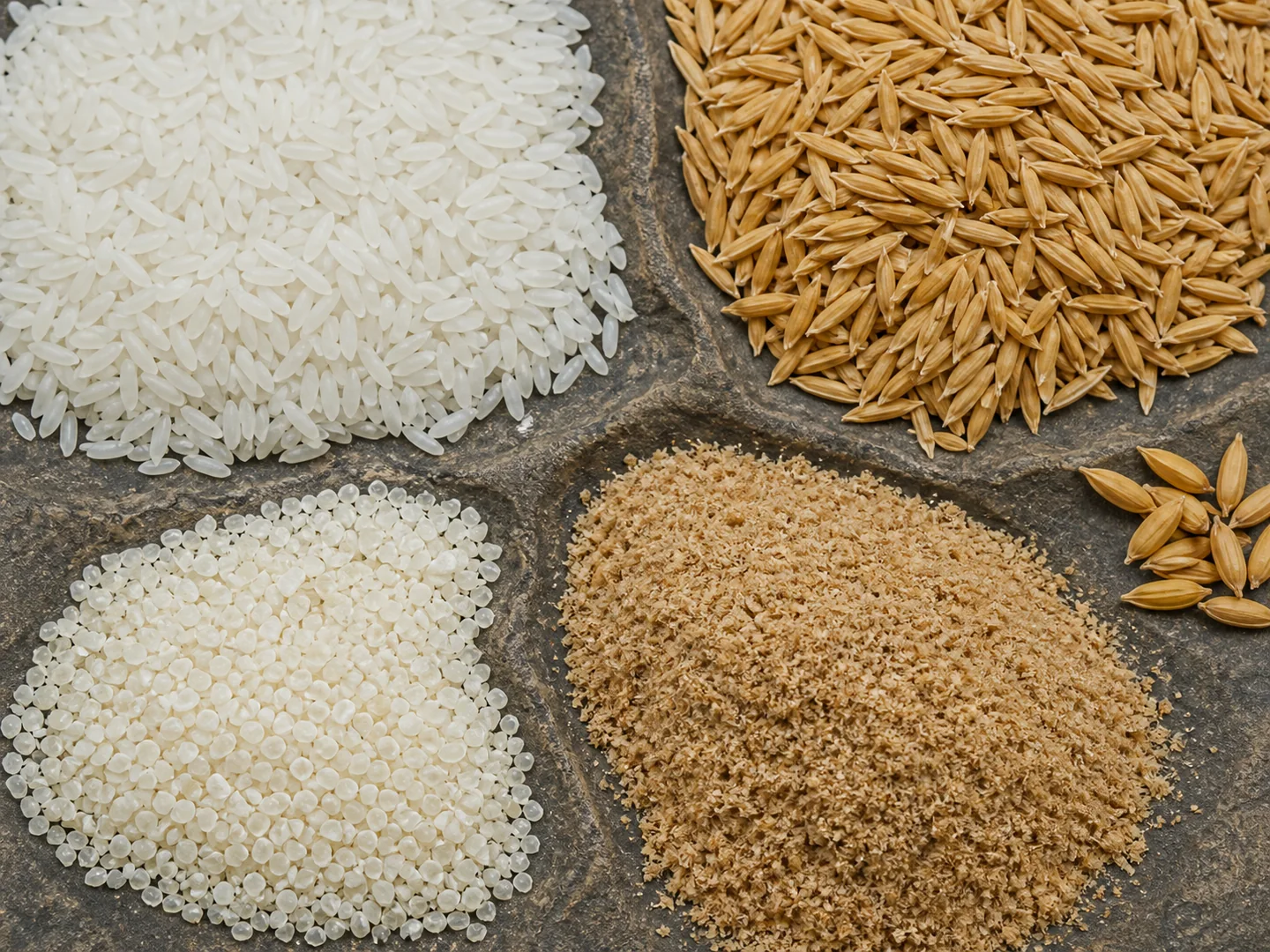
Whole or near-whole rice and broken rice are separated kernel fractions from rice milling. The practical difference is whether kernels remain substantially intact or are present as fragments under the applicable specification. Broken rice is a commercial output category, not automatically waste or automatically lower quality; suitability depends on the agreed fraction, cleanliness, processing, intended use, and current lot.
The distinction begins with kernel condition
Rice kernels can remain whole or near-whole through milling, or they can separate into smaller pieces. Milling guidance treats broken kernels as a fraction that can be separated from head rice or other milled-rice categories. Indian food standards also use defined terminology for rice and broken kernels.
The regulatory or contractual definition that applies to a transaction matters more than an informal visual impression. A website should therefore avoid inventing a percentage or translating a local market term into a formal grade without a verified specification.
Broken rice is an output, not a complete quality judgement
The word broken describes kernel size or integrity within a classification system. It does not by itself establish cleanliness, moisture condition, processing method, variety, suitability, or safety. Those are separate questions.
A broken-rice lot can be relevant to traders, wholesalers, retailers, restaurants, food-processing businesses, or institutional buyers, but the intended application and required specification should be discussed directly. The same label may not mean the same thing to every buyer.
- Confirm the written name and applicable specification.
- Ask how the lot was processed and separated.
- Agree the required fraction or sample rather than relying on a local term alone.
- Confirm current quantity, availability, commercial terms, and intended use directly.
Why kernels break
Kernel breakage can be influenced by the condition of the paddy and by handling across husking, whitening, conveying, and separation. A general article cannot attribute a particular broken fraction to one cause without records from that lot and process.
Responsible communication avoids promising that every batch will have identical appearance or behaviour. It also avoids implying that a visually larger grain automatically meets every commercial requirement.
Local names need owner-approved definitions
Dwar, Tiwar, Khanda, and Nakku have been retained in the site data as owner-editable names only. Their product group, grain profile, processing, characteristics, suitable uses, availability, minimum quantity, and pricing remain intentionally unspecified.
Before any of those names appears as a public specification, the business should define the term in writing, confirm how it is used at this mill, and review the description against the current material offered for enquiry.
Editorial record
- Prepared by
- Sudha Rice & Seeds Editorial Team
- Sources checked
- 26 July 2026
- Review status
- Business and operational review pending
The named editorial team describes content ownership, not a professional credential or independent certification. No reviewer is named while operational review remains pending.
Practical qualifications
- This article does not assign a universal specification to local terms such as Dwar, Tiwar, Khanda, or Nakku.
- No broken percentage, grain grade, variety, processing method, or price is published without an owner-approved specification.
- Natural agricultural variation and the milling setup can affect the appearance of a lot.
- A buyer should confirm the current sample or written specification before relying on a category name.
Sources checked for this article
These links support the general concepts stated above. They do not verify the equipment, process, products, or downstream operations of Sudha Rice & Seeds.
- International Rice Research Institute: Milling and processing
General milling stages, the distinction between husk, bran, milled rice and broken kernels, and the fact that mill configurations vary.
official guidance · Accessed 26 July 2026 - Food Safety and Standards Authority of India: Food product standards: cereals and cereal products
Indian regulatory terminology for rice, broken kernels and fragments; local mill terms are not treated as universal specifications.
regulation · Accessed 26 July 2026
Continue with the mill's canonical information.
Use these pages for the site's current business context and contact route. Availability and specifications still require direct confirmation.